Search This Blog

Wednesday, 12 March 2014

Urobo people


The Urhobos are people of southern Nigeria, near the northwestern Niger delta. The Urhobo is the major ethnic group in Delta State; the Delta State is one of the 36 states of the Federal Republic of Nigeria. They speak Urhobo, a language in the Niger–Congo group. The Isoko and Urhobo are related in language and culture, leading to the missionaries erroneously labelling both peoples as Sobo. This name was strongly rejected by both tribes. The Urhobo nation is made up of twenty two sub-groups, including Okpe[1] the largest of all Urhobo sub-groups? (disputable). The Urhobos are noted for having their own unique style of speaking Nigerian Pidgin English. Since their language is very demonstrative that translates into their style of speaking English and Pidgin English. As a result of their unique language style, their names are also unique. An example of a unique Urhobo name would be the name Onaodowan, belonging to the Onaodowan family from Warri and the Onomakpome, belonging to the Onomakpome family from Sapele. 
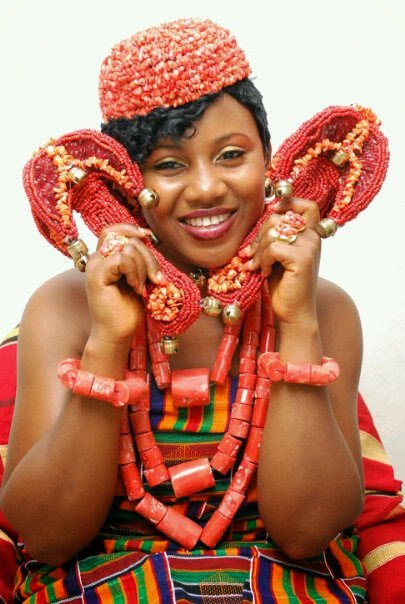

The Urhobos live very close to and sometimes on the surface of the Niger river. As such, most of their histories, mythologies, and philosophies are water-related. They have an annual fishing festival that includes masquerades, fishing, swimming contests, and dancing. There is also an annual, two-day, Ohworu festival in the southern part of the Urhobo area at which the Ohworhu water spirit and the Eravwe Oganga are displayed. The king in an Urhobo clan or kingdom is called the Ovie. His wife the queen is called Ovieya and his children Ọmọ Ovie (child of the king also known as prince and princes). Often nowadays, these names are also given to children without royal heritage by their parents. A number of Urhobo sub-groups have other titles other than Ovie, for example, the Okpe called their traditional ruler Orogie and Olomu called theirs Ohworode and Okere-Urhobo theirs Orosuen.

The Isoko people


The Isoko people are an ethno linguistic group that inhabits the Isoko region of Delta State, Nigeria. The Isokoland is one of the most densely populated areas in Nigeria, with about 500 persons per square kilometer compared with the average of 198 for Delta State and 130 for Nigeria. The consequence has been a shortage of farmland which is accentuated by oil exploration activities in the region. Many of the estimated over 475,000 Isoko people migrated to other parts of the country, residing in Ughelli, Warri, Sapele, Benin, Ijebu Ode, Ondo, Lagos and Kano just like every other ethnic group in Nigeria and predominately in the rural agricultural land areas of Benin, Ondo and Ijebu-Ode. The Isoko ethnic group is one of the smallest minority ethnic groups in the Niger Delta region of Nigeria in West Africa, occupying an area of about 1,200 square kilometres, with a residual population of over 750,000 by 2001 census. The language spoken by the Isoko people is the Isoko language. It is linguistically similar to that spoken by the neighboring Urhobo people. While people[who?] believe that the Isoko people originated from the Benin Kingdom, others, like Professor Obaro Ikime, believe this to be untrue. Ikime states "If there is any aspect of the history of the various peoples of Nigeria about which no one can speak with any exactitude, it is that which deals with the origins of our peoples."[2] The belief that most of the Isoko groups are of Benin origin were views held and expressed in the 1960s and 1970s. These views were "decidedly simplistic and were based on British Intelligence Reports of the 1930s"[2] and Ikime's field work of 1961-1963.The Isoko people are predominantly Christians. Traditional worship still thrives despite the strong onslaught of Christian principles. Ọghẹnẹ is the word for God. Although it can be generally termed as traditional religion, there are however some practices that are peculiar to some isoko community. For instance in the town of Emevor, some important festivals like "idhu and owhoru" which are celebrated annually and bi-annually.

The Efik People


The Efik are an ethnic group located primarily in southeastern Nigeria. 'Efik' is also the name of their language which is a variation of the Ibibio language. The Efik migrated down the Cross River from Cameroon in the 16th century and founded numerous settlements in the Calabar area in present-day Cross River State. This area along with present-day Akwa Ibom State are usually referred to as Calabar, and Calabar people accordingly, after the European name Calabar Kingdom given to their state of Akwa Akpa. Calabar is not to be confused with the Kalabari Kingdom in Rivers State which is an Ijaw state to its west. Cross River State and Akwa Ibom State were formerly one of the original twelve states of Nigeria known as the Southeastern State. 


A powerful bond of union among the Efik, and one that gives them considerable influence over other tribes, is the secret society known as the Ekpe, the inventor of the Nsibidi, an ancient African Writing. The Efik and indeed the people of the Old Calabar kingdom were the first to embrace western education in present day Nigeria, with the establishment of Hope Waddel Training Institute, Calabar in 1895 and the Methodist Boys High School, Oron in 1905.The Efik are related to the Annang, Ibibio, Oron, Biase, Akampkpa, Uruan, and Eket people by common ancestors. They all speak the same language with different dialects. Most importantly, regardless of the dialects, they share common names with same spelling. The Efik people speak the Efik Language. Various dialects of their language include Oron, Biase, Annang and Ibibio, Eket (Ekid) a subgroup of Ibibio was also one recognized dialect of the people.

Thursday, 6 February 2014

Ijaw people

The Ijaws are a nation of more than fourteen million people in the Niger Delta region of Nigeria, the most populous indigenous inhabitants of the Niger Delta and constitute the fourth largest ethnicity within the borders of Nigeria.
The term Ijaw is the anglicised version of Ijo or Ejo, a variation of Ujo or Ojo, the ancestor who gave the Ijo people our name. Other modern variations include Izon (Ijon), Ezon (Ejon) and Uzon (Ujon) meaning the same thing. Other names referring to Ijaw people are Uzo (at Benin), the original ancestral name Oru (in Ijaw and Ibo land) and Kumoni (in Ijaw). These names were applicable through the Niger Delta and environs as noted by early British visitors;


Although the Ijaw are now primarily Christians, with Catholicism being the variety of Christianity most prevalent amongst them, the Ijaw have elaborate traditional religious practices of their own. Veneration of ancestors plays a central role in Ijaw traditional religion, while water spirits, known as Owuamapu figure prominently in the Ijaw pantheon. In addition, the Ijaw practice a form of divination called Igbadai, in which recently deceased individuals are interrogated on the causes of their death. Ijaw religious beliefs hold that water spirits are like humans in having personal strengths and shortcomings, and that humans dwell amongst the water spirits before being born. The role of prayer in the traditional Ijaw system of belief is to maintain the living in the good graces of the water spirits amongst whom they dwelt before being born into this world, and each year the Ijaw hold celebrations in honor the spirits lasting for several days. Central to the festivities is the role of masquerades, in which men wearing elaborate outfits and carved masks dance to the beat of drums and manifest the influence of the water spirits through the quality and intensity of their dancing. Particularly spectacular masqueraders are taken to actually be in the possession of the particular spirits on whose behalf they are dancing.