Search This Blog

Friday, 4 April 2014

The Itsekiri People


The Itsekiri are an ethnic group of Nigeria's Niger Delta area, Delta State. The Itsekiri presently number under a million people and live mainly in the Warri South, Warri North and Warri South West local government districts of Delta State on the Atlantic Coast of Nigeria.


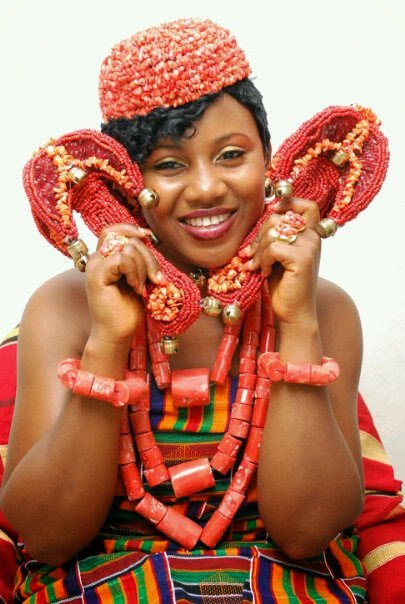
 The Itsekiris traditionally lived in a society that was governed by a monarchy (the Olu) and council of chiefs who form the nobility or aristocracy. Itsekiri society itself was organized along the lines of an upper class made up of the royal family and the aristocracy – the 'Oloyes and Olareajas' these were mainly drawn from noble houses including the Royal Houses and the Houses of Olgbotsere (Prime Minister or king maker) and Iyatsere (defense minister). The middle class or Omajaja were free-born Itsekiris or burghers. As a result of the institution of slavery and the slave trade there was a third class 'Oton-Eru' or those descended from the slave class whose ancestors had come from elsewhere and settled in Itsekiriland as indentured or slave laborers. In modern day Itsekiri society the slave class no longer exists as all are considered free-born. Traditionally, Itsekiri men wear a long sleeved shirt called a Kemeje, tie a George wrapper around their waist and wear a cap with a feather stuck to it. The women wear a blouse and also tie a George wrapper around their waist. They wear colorful head gears known as Nes (scarf) or coral beads. Itsekiris are also famed for their traditional fishing skills, melodious songs, gracefully fluid traditional dances and colorful masquerades and boat regattas.

Oron People


Oron was one of the major states in the Akwa Akpa Kingdom of present-day Nigeria. Oron people share a close ancestral lineage to the Efik people in Cross River State; Ibono, Uruan, Eastern Obolo in Akwa Ibom State and the Andoni (Obolo) people in Rivers State. The Oron people speak a dialect known as "Örö" by the Oronians, but widely called "Oron", an anglicized spelling and pronunciation. Many Oron people are also fluent in the Efik dialect. Örö has many dialectical similarities with the Ibibio and Annang people, hence many Oronians can communicate proficiently in Ibibio and Annang languages. The Oron people (Örö) are a major ethnic group in Akwa Ibom State, Nigeria.

 
 The Oron people have a unique culture and tradition. The Ekpe Society is used in Oron land as the traditional authority. Other ruling secret societies include: the Ekpo, Abang, Edeme awan nkwho, Ekon, Afikegit, Konkoma, Mbok, Ababa, and Nnabo. All these cultural attributes, alongside the Oron people's hospitality, arts, food, and oil and gas minerals attract tourism and commerce.The Oron people have a very colourful mode of traditional dressing with a piece of fabric called the Iyara (usually red in colour). The red Iyara is usually worn with a white tailored traditional shirt and wrap-around (wrapper) fabric common to people all over the South-Southern regions Nigeria. Sometimes this attire is combined with a rich native tie, usually a colourful silk fabric worn around the neck. These attires are also commonly worn by the Efik, Ibibios and Annang ethnic groups, except that the Annang and Ibibio people do not wear a red Iyara.

Wednesday, 12 March 2014

Ibibio People


The Ibibio are a people of southeastern Nigeria. They are related to the Anaang and the Efik peoples. During colonial period in Nigeria, the Ibibio Union asked for recognition by the British as a sovereign nation (Noah, 1988). The Annang, Efik, Ekid, Oron and Ibeno share personal names, culture, and traditions with the Ibibio, and speak closely related varieties of Ibibio-Efik. The Ibibio have lived in the Cross River area of modern day Nigeria for several hundred years, and while written information about them only exists in colonial records from the late 19th century on, oral traditions have them in the region much earlier than this. "Ibio-ibio" means short or brief and doesn't have anything to do with "ulok" and while it is called "ufok" by some other Ibibio groups. The name "Ikot" often replaces "the house of... or the people of ", referring to their origin or ancesstors. Another meaning for Ikot in Ibibio land is bush.


  Ibibio religion was of two dimensions, which centered on the pouring of libation, worship, consultation, communication and invocation of the God of Heaven (Abasi Enyong) and God of the Earth (Abasi Isong) by the Constitutional and Religious King/Head of a particular Ibibio Community who was known from the ancient times as the Obong-Ikpaisong (the word 'Obong Ikpaisong' directly interpreted means King of the Principalities of the Earth' or 'King of the Earth and the Principalities' or Traditional Ruler). The second dimension of Ibibio Religion centered on the worship, consultation, invocation, sacrifice, appeasement, etc. of the God of the Heaven (Abasi Enyong) and the God of the Earth (Abasi Isong)through various invisible or spiritual entities (Ndem) of the various Ibibio Division such as Etefia Ikono, Awa Itam, etc. The Priests of these spiritual entities (Ndem) were the Temple Chief Priests of the various Ibibio Divisions. A particular Ibibio Division could consist of many inter-related autonomous communities or Kingdoms ruled by an autonomous Priest-King called Obong-Ikpaisong, assisted by Heads of the various Large Families (Mbong Ekpuk) which make up the Community. These have been the ancient political and religious system of Ibibio people from time immemorial. Tradition, interpreted in Ibibio Language, is 'Ikpaisong'. Tradition (Ikpaisong) in Ibibio Custom embodies the Religious and Political System. The word 'Obong' in Ibibio language means 'Ruler, King, Lord, Chief, Head' and is applied depending on the Office concern. In reference to the Obong-Ikpaisong, the word 'Obong' means 'King' In reference to the Village Head, the word means 'Chief'. In reference to the Head of the Families (Obong Ekpuk), the word means 'Head' In reference to God, the word means 'Lord'. In reference to the Head of the various societies - e.g. 'Obong Obon', the word means 'Head or Leader'.

Urobo people


The Urhobos are people of southern Nigeria, near the northwestern Niger delta. The Urhobo is the major ethnic group in Delta State; the Delta State is one of the 36 states of the Federal Republic of Nigeria. They speak Urhobo, a language in the Niger–Congo group. The Isoko and Urhobo are related in language and culture, leading to the missionaries erroneously labelling both peoples as Sobo. This name was strongly rejected by both tribes. The Urhobo nation is made up of twenty two sub-groups, including Okpe[1] the largest of all Urhobo sub-groups? (disputable). The Urhobos are noted for having their own unique style of speaking Nigerian Pidgin English. Since their language is very demonstrative that translates into their style of speaking English and Pidgin English. As a result of their unique language style, their names are also unique. An example of a unique Urhobo name would be the name Onaodowan, belonging to the Onaodowan family from Warri and the Onomakpome, belonging to the Onomakpome family from Sapele. 


The Urhobos live very close to and sometimes on the surface of the Niger river. As such, most of their histories, mythologies, and philosophies are water-related. They have an annual fishing festival that includes masquerades, fishing, swimming contests, and dancing. There is also an annual, two-day, Ohworu festival in the southern part of the Urhobo area at which the Ohworhu water spirit and the Eravwe Oganga are displayed. The king in an Urhobo clan or kingdom is called the Ovie. His wife the queen is called Ovieya and his children Ọmọ Ovie (child of the king also known as prince and princes). Often nowadays, these names are also given to children without royal heritage by their parents. A number of Urhobo sub-groups have other titles other than Ovie, for example, the Okpe called their traditional ruler Orogie and Olomu called theirs Ohworode and Okere-Urhobo theirs Orosuen.